Why Reading at Bedtime Matters More Than You Think

A research-informed perspective for parents

There is something deceptively simple about reading a story at bedtime.

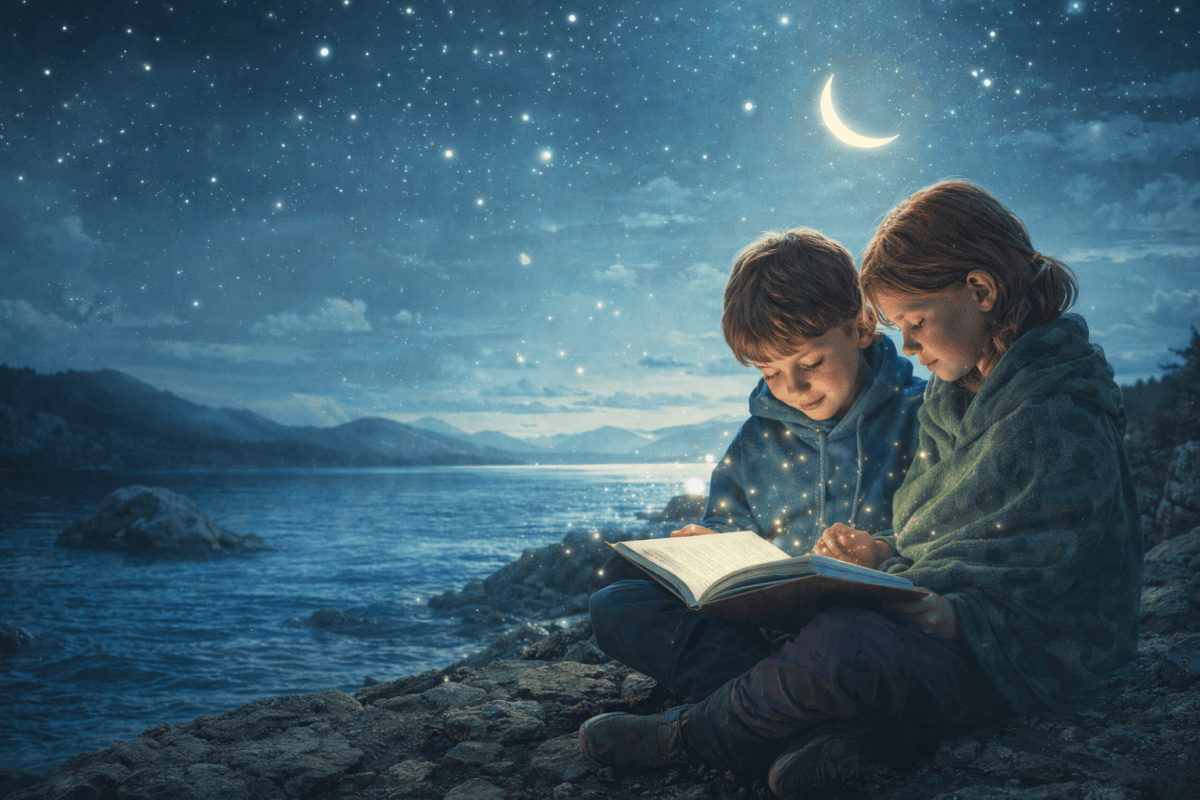
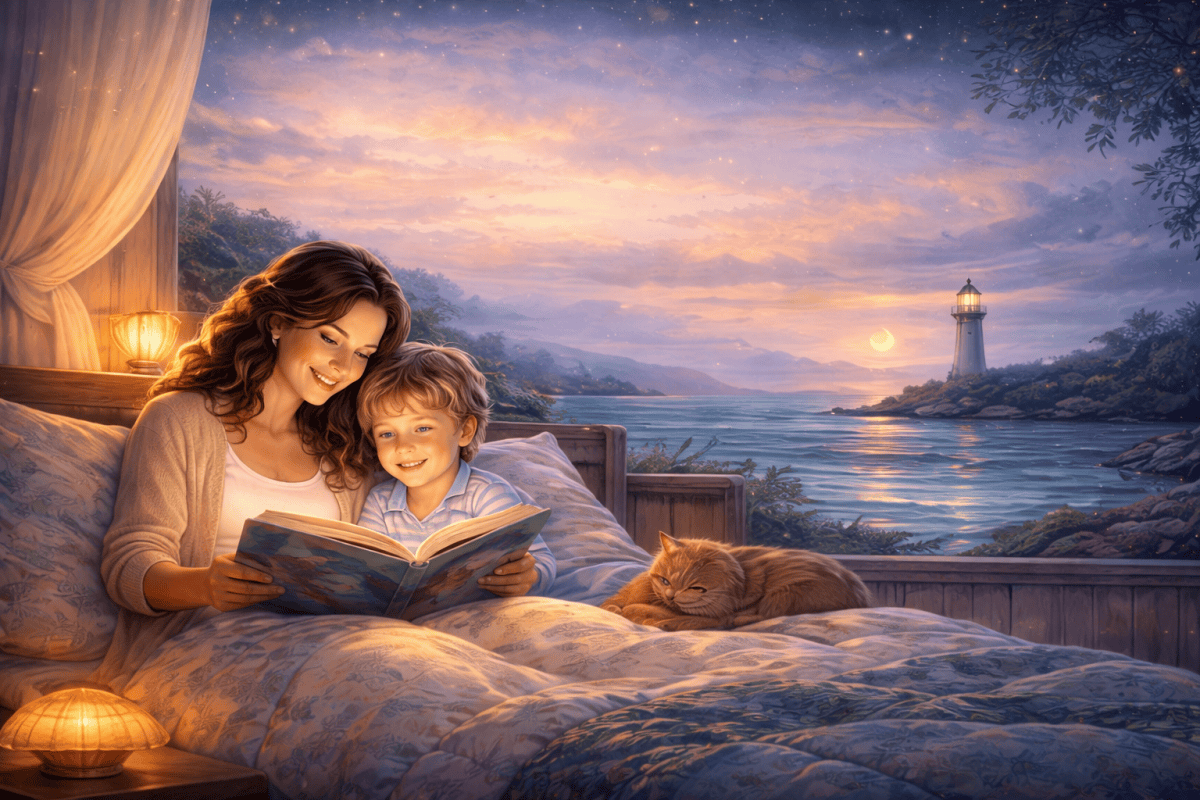
A book. A quiet voice. A child curled beside you.

Yet research in child development consistently shows that these moments are not just comforting rituals—they are foundational to how children learn to read, think, and understand the world.

As a primary school teacher, I see the long-term impact of these early experiences every day. The children who thrive in literacy are not always those who arrive already reading—but those who have been immersed in reading as a shared, meaningful experience.


Children begin learning to read long before they can decode words

One of the most important ideas in early literacy is that reading does not begin with phonics instruction. Instead, it develops gradually through what researchers call emergent literacy (Teale & Sulzby, 1986).

Emergent literacy recognises that children start building reading skills from infancy through everyday interactions—especially when they are read to.

Through bedtime reading, children begin to understand:

  • That print carries meaning
  • How books are structured
  • The rhythm and patterns of language
  • How stories are organised

Even before they can recognise letters, children are already constructing a mental model of what reading is.


Children learn through observation and modelling

Developmental psychology highlights that children learn not only through instruction, but through watching others.

Albert Bandura’s social learning theory (1977) emphasises that children acquire behaviours through observation and imitation. When a child watches a parent read—turning pages, using expression, engaging with the story—they are internalising what reading looks and feels like.

This is why many children will:

  • “Read” stories from memory
  • Mimic intonation and expression
  • Use narrative phrases in their speech

These behaviours are not incidental—they are early forms of literacy development.


Shared reading supports development within the child’s learning zone

Lev Vygotsky’s concept of the Zone of Proximal Development (1978) helps explain why reading together is so effective.

Children can understand far more complex language and ideas when supported by an adult than they can independently. During bedtime reading, the adult provides:

  • Vocabulary beyond the child’s current level
  • Explanations and context
  • Emotional cues and interpretation

This process—often called scaffolding—enables children to gradually internalise language and comprehension skills.


Language development is strengthened through story

A strong body of research shows that shared reading significantly enhances children’s language development.

Children who are regularly read to are exposed to a wider and richer vocabulary than in everyday conversation (Mol & Bus, 2011). Books introduce:

  • More complex sentence structures
  • Less common words
  • Rich descriptive language

Over time, this exposure supports both oral language development and later reading comprehension.


Reading together builds more than literacy—it builds relationships

While the cognitive benefits of reading are well documented, the emotional dimension is equally important.

Jerome Bruner (1983) emphasised that children learn language through meaningful social interactions. Bedtime reading provides a consistent, calm, one-to-one context in which children feel secure and engaged.

This emotional connection matters because:

  • It creates positive associations with books
  • It supports attention and engagement
  • It fosters a sense of safety and belonging

Children who associate reading with comfort and closeness are more likely to develop intrinsic motivation to read.


The long-term impact of shared reading

Research has consistently demonstrated that shared book reading is strongly linked to later reading success.

A meta-analysis by Bus, Van IJzendoorn, and Pellegrini (1995) found that children who experience regular shared reading show significant advantages in:

  • Language development
  • Early literacy skills
  • Reading achievement

Importantly, these benefits are cumulative. Small, consistent moments—like bedtime reading—build over time into substantial developmental gains.


What this means for parents

The evidence is clear:

You do not need to “teach” reading at bedtime.
You simply need to share it.

Even a short daily routine of reading together can:

  • Strengthen your child’s language skills
  • Build their understanding of stories
  • Support future reading success
  • Foster a lifelong love of books

It is not about perfection, performance, or pressure.

It is about presence.


A final thought

In the classroom, we often focus on what children can do—the words they can decode, the sounds they can recognise.

But long before that, something quieter is happening.

A child listens.
A child watches.
A child begins to understand that reading is something meaningful.

And often, that understanding begins at bedtime.


References

Bandura, A. (1977). Social Learning Theory. Englewood Cliffs, NJ: Prentice Hall.

Bruner, J. (1983). Child’s Talk: Learning to Use Language. Oxford: Oxford University Press.

Bus, A. G., Van IJzendoorn, M. H., & Pellegrini, A. D. (1995). Joint book reading makes for success in learning to read: A meta-analysis. Review of Educational Research, 65(1), 1–21.

Mol, S. E., & Bus, A. G. (2011). To read or not to read: A meta-analysis of print exposure from infancy to early adulthood. Psychological Bulletin, 137(2), 267–296.

Teale, W. H., & Sulzby, E. (1986). Emergent Literacy: Writing and Reading. Norwood, NJ: Ablex.

Vygotsky, L. S. (1978). Mind in Society: The Development of Higher Psychological Processes. Cambridge, MA: Harvard University Press.

Whitehurst, G. J., & Lonigan, C. J. (1998). Child development and emergent literacy. Child Development, 69(3), 848–872.
When the Tide Replaces the Timeline

Attention, Island Cultures, and Art as Witness

In a world increasingly shaped by screens, it is possible to forget how to look.

Digital devices connect us across vast distances, yet they can also draw our attention away from the landscapes directly in front of us. Social media feeds refresh endlessly, notifications interrupt moments of quiet, and algorithms determine much of what we see and read each day.

Against this background, something simple but profound can happen when attention returns to the physical world.

The sea, perhaps more than any other landscape, reminds us how to notice again.


The moment the rain was already falling

Recently I experienced a moment that crystallised this shift in awareness.

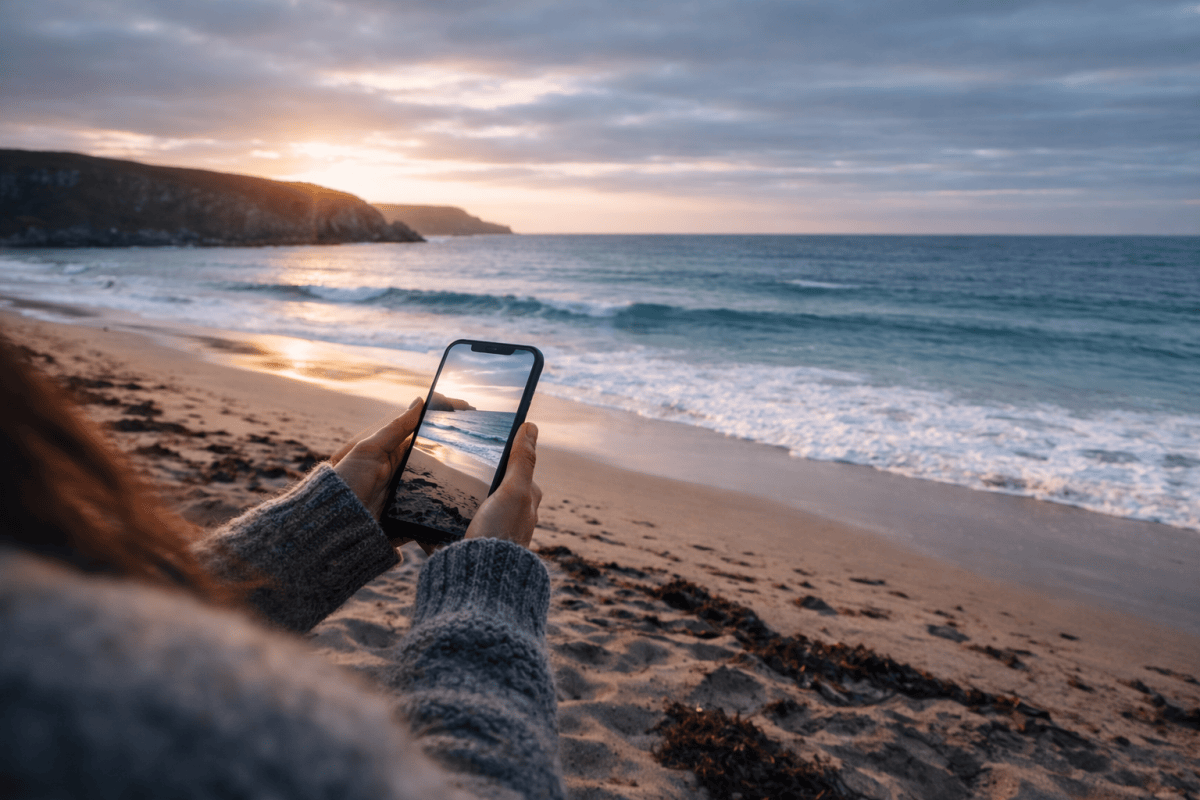
I was sitting at my desk beside a window, working on my computer, when a notification appeared on Facebook informing me that it was raining in my area. I looked at the screen, paused, and then turned my head toward the window.

It was raining.

The moment felt strangely disorientating. Technology had informed me of something that was already happening directly outside my window.

It was a small experience, but it revealed how easily digital mediation can replace direct perception.

In an age where information flows continuously through devices, it becomes possible to know about the world without actually observing it.


The digital attention economy

Over the past two decades, researchers have increasingly examined how digital technologies reshape patterns of human attention.

Many social media platforms operate within what scholars describe as the attention economy, where human focus becomes a valuable commodity (Davenport & Beck, 2001). Interfaces such as infinite scrolling feeds and intermittent notifications are designed to keep users engaged for as long as possible.

Technology ethicist Tristan Harris has argued that many digital systems are intentionally structured to exploit psychological vulnerabilities such as reward anticipation and social validation.

Media theorist Nicholas Carr suggests that these environments can encourage rapid scanning of information rather than sustained concentration. In The Shallows, Carr argues that constant exposure to fragmented information streams may reshape how people read, think, and process knowledge (Carr, 2010).

For many people, this shift becomes noticeable when attempting activities that require deeper attention—reading books, writing by hand, or spending extended time outdoors.


Following the sun

There was a time in my life when my relationship with time felt very different.

While living in Queensland, Australia, daily life often unfolded according to the movement of the sun rather than digital notifications or rigid schedules.

Morning began with light rising over the outback. Afternoons stretched long and warm beneath open skies. Evening arrived slowly as the sun dropped toward the horizon.

Time felt embodied.

Instead of checking devices for updates, the day revealed itself through subtle environmental changes—light shifting across the water, winds picking up along the coast, birds moving across the sky.

Living in this way demonstrated how attention can be anchored in landscape rather than technology.


Reading the sea: surfers and seafarers

Different coastal cultures often develop their own ways of reading the sea.

While living in Queensland, I spent time observing surfers and the rituals that shaped their relationship with the ocean. Surfers frequently arrived early and stood quietly at the shoreline before entering the water. They watched the horizon, studying the rhythm of incoming swells, the intervals between waves, and the direction of the wind.

What appeared casual was in fact a form of environmental literacy. Experienced surfers could predict how waves would break across reefs or sandbanks simply by studying the shape and timing of the swell.

The sea was not simply something to play in—it was something to read.

This form of embodied knowledge resonates strongly with maritime traditions in island communities.

In Shetland, conversations with local seafarers reveal similarly nuanced relationships with the ocean. Fishermen and sailors often describe how they can read the sea through subtle cues: the direction of the wind, the movement of tides, the behaviour of seabirds, or the position of the moon.

Lunar cycles, tidal movements, and atmospheric conditions have long shaped safe navigation and fishing practices. Such knowledge is rarely written down. Instead, it is learned gradually through observation and experience.

Anthropologist Tim Ingold describes this type of understanding as dwelling knowledge, a way of knowing that emerges from sustained engagement with an environment rather than abstract instruction (Ingold, 2000).

In both contexts—the surfer scanning the swell and the seafarer interpreting wind and tide—the ocean becomes a text that can be read by those who learn to pay attention.


Island cultures and ecological time

Island communities often cultivate particularly close relationships with surrounding environments.

Island studies scholar Godfrey Baldacchino notes that island societies frequently develop heightened environmental awareness because livelihoods are closely tied to land and sea systems (Baldacchino, 2007).

In maritime cultures such as Shetland, fishing, crofting, and seafaring historically required detailed observation of weather patterns, tidal movements, and ocean conditions.

Pacific scholar Epeli Hauʻofa offers a powerful interpretation of this relationship. In Our Sea of Islands, Hauʻofa argues that Pacific Islanders historically understood the ocean not as empty space separating islands but as a cultural network connecting communities across vast distances (Hauʻofa, 1994).

Within this worldview, the ocean becomes both environment and knowledge system.

Tides, currents, winds, and stars carry information. Attention becomes ecological rather than technological.


Art as environmental witness

Art can play an important role in documenting these relationships between people and place.

Environmental humanities scholar T. J. Demos describes contemporary ecological art as a form of environmental witnessing, where artistic practices document ecological realities and invite reflection on environmental futures (Demos, 2016).

Artists working in coastal environments frequently record subtle changes in landscapes, weather patterns, wildlife, and human interaction with the sea.

Photography, painting, sound recording, and film can function as sensory archives of place.

Practice-led research scholar Linda Candy argues that creative practice can itself produce knowledge. Through observation and reflection, artists generate insights that complement traditional academic research (Candy & Edmonds, 2018).

In this sense, art becomes a way of paying attention.

Photographing the same beach across seasons, for example, can reveal shifting light, tidal patterns, and changing weather. Recording the sound of waves or seabirds captures atmospheric qualities that written description alone cannot convey.

Such practices create forms of environmental memory.


Attention restoration and the ocean

Psychological research also suggests that natural environments can help restore cognitive focus.

Environmental psychologists Rachel Kaplan and Stephen Kaplan developed Attention Restoration Theory, proposing that exposure to natural landscapes can replenish mental resources depleted by sustained directed attention (Kaplan & Kaplan, 1989).

More recent studies suggest that time spent in natural environments can reduce stress and improve cognitive functioning (Bratman et al., 2015).

Coastal landscapes appear particularly effective in this regard. The rhythmic movement of waves, expansive horizons, and multisensory qualities of marine environments create conditions that encourage contemplation and relaxation.


The ocean as a teacher of attention

The ocean teaches attention differently from digital systems.

Digital platforms operate through speed and novelty. Feeds refresh constantly, encouraging rapid shifts in focus.

The sea moves according to different rhythms.

Tides rise and fall over hours. Weather systems develop over days. Ecological changes unfold across seasons.

Sociologist Hartmut Rosa describes modern life as characterised by social acceleration, where technological systems continually increase the pace of communication and activity (Rosa, 2013).

Natural environments, however, can offer what Rosa calls resonance—moments of meaningful connection with the world.

Watching waves roll toward shore or observing seabirds navigating coastal winds invites a slower form of awareness.

The sea does not demand attention. It invites it.


Looking up again

Technology itself is not inherently harmful. Digital tools can support creativity, connection, and accessibility when used intentionally.

Yet when screens begin to replace direct experience of the world around us, something essential may be lost.

Sometimes the most radical act is simply to look up. So I’ve decided to create #lookup – a movement to remind us to ditch the screen for a while and get back into nature:

To notice the rain without needing a notification.

To watch the tide instead of the timeline.

The ocean does not compete for attention.

It does not flash alerts or refresh its feed.

It moves with rhythms that existed long before digital networks and will continue long after them.

In a world of constant scrolling, the ocean reminds us how to look again.


References

Baldacchino, G. (2007). A World of Islands: An Island Studies Reader.

Bratman, G., Hamilton, J., & Daily, G. (2015). The impacts of nature experience on human cognitive function and mental health. Annals of the New York Academy of Sciences.

Candy, L., & Edmonds, E. (2018). Practice-Based Research in the Creative Arts.

Carr, N. (2010). The Shallows.

Crary, J. (2013). 24/7: Late Capitalism and the Ends of Sleep.

Davenport, T., & Beck, J. (2001). The Attention Economy.

Demos, T. J. (2016). Decolonizing Nature.

Harris, T. (2016). How Technology Hijacks People’s Minds.

Hauʻofa, E. (1994). Our Sea of Islands.

Ingold, T. (2000). The Perception of the Environment.

Kaplan, R., & Kaplan, S. (1989). The Experience of Nature.

Morton, T. (2010). The Ecological Thought.

Newport, C. (2019). Digital Minimalism.

Rosa, H. (2013). Social Acceleration.

Andrea Bibby (Ocean Cry) is an artist, writer, and publisher based in Shetland. Her work explores the relationship between ocean environments, cultural identity, and human wellbeing through art, writing, and practice-led research. Through Ocean Cry she examines how coastal landscapes shape attention, creativity, and ecological awareness.

Listening to the Ocean: Björk’s Ecological Aesthetics and the Sea as Creative Presence

Introduction

For many artists working in coastal environments, the ocean is more than a landscape. It is a presence that shapes identity, sound, memory, and imagination. In contemporary art and music, few figures embody this relationship as powerfully as Björk. Across her career, Björk has consistently explored the relationship between humans and the natural world, drawing deeply on Iceland’s volcanic geology, oceanic climate, and ecological rhythms.

Her work offers a compelling example of what might be described as ecological aesthetics—an artistic approach in which natural systems are not merely subjects of representation but active collaborators in the creative process. Nowhere is this more evident than in her engagement with the ocean. From songs narrated by the sea itself to immersive visual installations inspired by natural phenomena, Björk’s practice suggests that the ocean can function as a creative witness, observing and shaping human culture while remaining fundamentally beyond it.

This idea resonates strongly within island cultures, where the sea forms both physical boundary and cultural lifeline. Through music, visual art, and digital media, Björk’s work offers an important case study in how contemporary artists translate marine environments into aesthetic experience.


The Ocean as Origin

Björk grew up in Reykjavík, a city surrounded by the North Atlantic. In interviews she has frequently described the sea as a formative presence in her life, stating that walking down to the ocean felt like returning home.

This connection reflects a broader aspect of Icelandic culture, where landscapes are experienced not as passive scenery but as living forces. The ocean shapes weather, economy, mythology, and daily life. In this context, artistic creativity often emerges from an intimate relationship with natural systems.

Rather than presenting nature as something separate from human culture, Björk’s work suggests a world in which human creativity emerges from ecological conditions. Sound, rhythm, and visual imagery frequently echo the cycles and energies of natural environments.


The Ocean as Voice

One of the most explicit examples of this relationship appears in the song Oceania, written for the opening ceremony of the 2004 Olympic Games.

Unlike traditional songs about the sea, Oceania is narrated by the ocean itself. The lyrics speak from the perspective of the primordial waters from which human life emerged:

“Your sweat is salty, I am why.”

Here the ocean becomes narrator, ancestor, and witness simultaneously. Humanity is framed not as separate from nature but as a continuation of marine life.

This perspective aligns with emerging ecological philosophies that challenge the traditional division between humans and the natural world. Instead, nature becomes a participant in cultural expression.


Ecological Systems and Artistic Practice

Björk’s interest in the relationship between art and natural systems became especially prominent in the project Biophilia.

The project combined music, visual design, education, and digital technology in an exploration of natural phenomena such as gravity, tectonic movement, and crystallisation. Custom-built musical instruments translated natural processes into sound, including devices that used pendulums and electromagnetic forces.

Through Biophilia, Björk proposed that artistic creativity and scientific observation share a common origin: curiosity about the patterns that shape the natural world.

In this sense, the project can be understood as an attempt to build a creative ecosystem, where art, science, and environment are intertwined.


Visual Art and Immersive Environments

Björk’s work increasingly moved beyond music into immersive visual art environments. The exhibition Björk Digitalpresented a series of virtual reality experiences that place viewers inside evolving natural and emotional landscapes.

These installations often evoke underwater environments, organic textures, and fluid biological forms. Rather than presenting nature as static imagery, the works immerse audiences within dynamic ecological systems.

Similarly, the major retrospective Björk retrospective exhibition at the Museum of Modern Art framed Björk’s career as a multidisciplinary artistic practice spanning music, film, costume design, technology, and installation.

This curatorial approach emphasised the way her work creates sensory environments, echoing the immersive experience of natural landscapes such as coastlines or volcanic terrain.


Soundscapes and Marine Imagination

Another important aspect of Björk’s practice is her attention to sound as a spatial and ecological phenomenon. Her compositions often incorporate layered vocal textures, environmental recordings, and unconventional instrumentation.

These sonic strategies mirror the structure of natural soundscapes, where multiple elements—wind, water, wildlife, and geological movement—combine to form complex acoustic environments.

In marine environments, sound plays a particularly significant role. Many ocean species rely on acoustic communication, and underwater sound travels vast distances. Artists working with ocean themes often draw inspiration from these acoustic properties.

Björk’s music frequently evokes this sense of spatial depth, creating sound environments that feel fluid, immersive, and organic.


Island Culture and Ocean Identity

The relationship between Björk’s work and the ocean can also be understood through the lens of island culture.

Island societies often develop distinctive cultural identities shaped by geographic isolation and maritime connection. The ocean is simultaneously barrier, resource, and symbolic horizon.

Artists emerging from these contexts frequently explore themes of:

  • migration
  • ecological awareness
  • weather and atmosphere
  • human vulnerability within natural systems

Björk’s work reflects many of these themes. Her artistic language often merges technological experimentation with deeply elemental imagery—lava, water, crystals, and biological structures.

This combination suggests an attempt to articulate a form of contemporary island cosmology, in which modern technology coexists with ancient ecological awareness.


The Ocean as Creative Witness

The idea of the ocean as a creative witness offers a useful framework for understanding Björk’s work.

Rather than depicting nature as scenery, this concept proposes that natural environments observe and shape human culture over time. The sea records histories of migration, trade, climate, and myth. Artists who engage deeply with marine environments often become interpreters of these layered histories.

Through music, visual art, and immersive technologies, Björk translates the sensory and emotional experience of living near the sea into artistic form. Her work invites audiences to listen more closely to the natural world and to recognise the ecological relationships that sustain human life.

In this sense, the ocean becomes not only a source of inspiration but a collaborator in creative practice.


Conclusion

Björk’s multidisciplinary work demonstrates how contemporary art can engage deeply with ecological systems and environmental awareness. By drawing on Iceland’s landscapes and marine environment, she has developed an artistic language that treats nature as a living presence within cultural expression.

Her exploration of soundscapes, immersive visuals, and natural phenomena suggests new ways of thinking about the relationship between creativity and ecology.

For artists working in coastal and island environments, her work offers an important example of how the ocean can function as both subject and witness—a force that shapes imagination, identity, and artistic practice.

Listening to the ocean, in this sense, becomes not simply an act of observation but a form of cultural dialogue.


Ocean Cry is an artist, writer, and musician exploring the relationship between the ocean, creativity, and island cultures. Drawing inspiration from natural soundscapes, alternative music, and coastal landscapes, the work moves between art, music, and writing to examine how the sea shapes identity, imagination, and wellbeing.

References

Academic

Björk related

The Power of Imagination in Childhood: Creativity, Nature, and the Stories We Tell

There is something remarkable about the way children experience the world. What adults might perceive as ordinary—a puddle, a stick, a shadow—can become something entirely different through the lens of imagination. Developmental psychologists have long observed that imaginative play allows children to transform everyday objects into symbols within evolving narratives. A stick may become a sword, a wand, or a fishing rod in a sea of imagined adventure.

Far from being trivial, this capacity for symbolic play forms a critical foundation for cognitive and emotional development.

Research in developmental psychology suggests that imaginative play supports the growth of creativity, empathy, language development, and problem-solving abilities. Lev Vygotsky argued that imaginative play enables children to explore possibilities beyond immediate reality, allowing them to experiment with roles, relationships, and emotional experiences within a safe framework of storytelling (Vygotsky, 1978). Similarly, studies of pretend play indicate that imaginative environments help children develop flexible thinking and narrative skills, which are essential for later learning and social interaction (Singer & Singer, 2006).

In this sense, imagination is not simply entertainment—it is a form of cognitive rehearsal for life.

Children’s literature plays an important role in nurturing this imaginative capacity. Stories offer symbolic landscapes in which young readers can explore ideas about nature, identity, curiosity, and belonging. Scholars of childhood education have noted that storytelling allows children to encounter the world through metaphor and narrative, helping them build meaning and emotional understanding (Nikolajeva, 2014).

Nature-based storytelling in particular can encourage children to develop an early sense of ecological awareness. Encounters with natural imagery—forests, oceans, the moon, animals—often invite reflection on the interconnectedness between humans and the natural world. Environmental educators suggest that early imaginative engagement with nature can foster lifelong environmental empathy and curiosity (Louv, 2008).

These ideas continue to shape my own creative practice.

When creating stories for Urban Viking Kids, I often begin with small moments of observation: the way light moves across water, how the moon seems to follow us as we walk home, or how children notice patterns and textures adults overlook. Books such as Mother Moon and Nature’s Rainbow emerge from these moments of quiet attention to landscape and atmosphere.

Rather than presenting nature simply as a backdrop, these stories attempt to invite children into a space of wonder and reflection, encouraging them to slow down and notice the subtle rhythms of the world around them.

In contemporary childhood environments—often shaped by fast-paced digital media and screen-based entertainment—imaginative engagement with stories may play an increasingly important role. Educational researchers have expressed concern that reduced opportunities for unstructured play and outdoor exploration can limit children’s ability to develop creative thinking and attentional depth (Gray, 2013). Within this context, storytelling becomes more than a pastime; it becomes a space where imagination can expand freely.

Imagination teaches patience, curiosity, and courage. It reminds us that not everything in life must be measured or explained. Some experiences—particularly those connected to nature, creativity, and storytelling—invite us simply to observe, reflect, and feel.

Reading with children offers a unique opportunity to nurture this imaginative space. When we pause over a page, notice the colours in an illustration, or ask a child what they think might happen next, we encourage them to participate in the creation of meaning rather than passively consuming information.

Each story shared becomes a seed planted in the landscape of the child’s imagination.

Over time, those seeds grow into creativity, empathy, and curiosity—qualities that shape artists, innovators, scientists, and compassionate communities.

In this way, the stories we read together may become part of a much larger narrative: one in which imagination continues to shape how future generations see the world.


References

Gray, P. (2013). Free to Learn: Why Unleashing the Instinct to Play Will Make Our Children Happier, More Self-Reliant, and Better Students for Life. Basic Books.

Louv, R. (2008). Last Child in the Woods: Saving Our Children from Nature-Deficit Disorder. Algonquin Books.

Nikolajeva, M. (2014). Reading for Learning: Cognitive Approaches to Children’s Literature. John Benjamins.

Singer, D., & Singer, J. (2006). Imagination and Play in the Electronic Age. Harvard University Press.

Vygotsky, L. (1978). Mind in Society: The Development of Higher Psychological Processes. Harvard University Press.

Ocean Cry is an artist, writer, and musician exploring the relationship between the ocean, creativity, and island cultures. Drawing inspiration from natural soundscapes, alternative music, and coastal landscapes, the work moves between art, music, and writing to examine how the sea shapes identity, imagination, and wellbeing.