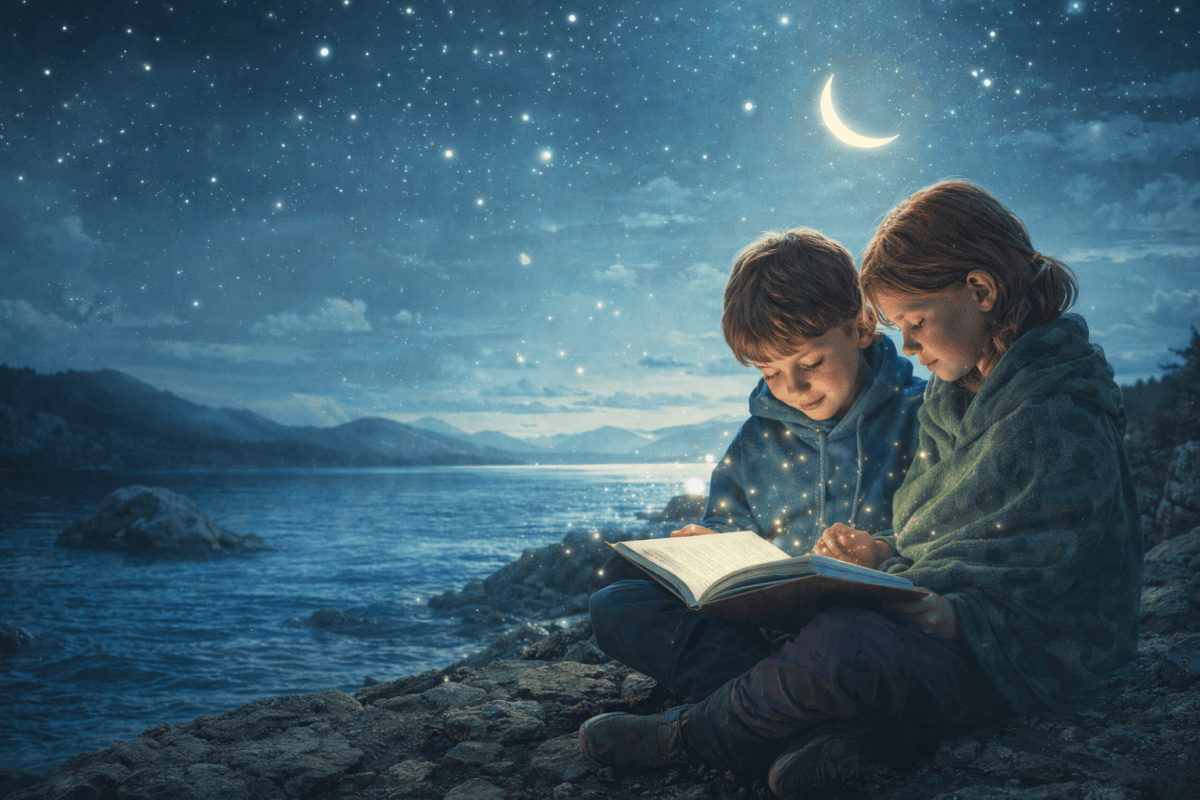
There is something remarkable about the way children experience the world. What adults might perceive as ordinary—a puddle, a stick, a shadow—can become something entirely different through the lens of imagination. Developmental psychologists have long observed that imaginative play allows children to transform everyday objects into symbols within evolving narratives. A stick may become a sword, a wand, or a fishing rod in a sea of imagined adventure.
Far from being trivial, this capacity for symbolic play forms a critical foundation for cognitive and emotional development.
Research in developmental psychology suggests that imaginative play supports the growth of creativity, empathy, language development, and problem-solving abilities. Lev Vygotsky argued that imaginative play enables children to explore possibilities beyond immediate reality, allowing them to experiment with roles, relationships, and emotional experiences within a safe framework of storytelling (Vygotsky, 1978). Similarly, studies of pretend play indicate that imaginative environments help children develop flexible thinking and narrative skills, which are essential for later learning and social interaction (Singer & Singer, 2006).
In this sense, imagination is not simply entertainment—it is a form of cognitive rehearsal for life.
Children’s literature plays an important role in nurturing this imaginative capacity. Stories offer symbolic landscapes in which young readers can explore ideas about nature, identity, curiosity, and belonging. Scholars of childhood education have noted that storytelling allows children to encounter the world through metaphor and narrative, helping them build meaning and emotional understanding (Nikolajeva, 2014).
Nature-based storytelling in particular can encourage children to develop an early sense of ecological awareness. Encounters with natural imagery—forests, oceans, the moon, animals—often invite reflection on the interconnectedness between humans and the natural world. Environmental educators suggest that early imaginative engagement with nature can foster lifelong environmental empathy and curiosity (Louv, 2008).
These ideas continue to shape my own creative practice.
When creating stories for Urban Viking Kids, I often begin with small moments of observation: the way light moves across water, how the moon seems to follow us as we walk home, or how children notice patterns and textures adults overlook. Books such as Mother Moon and Nature’s Rainbow emerge from these moments of quiet attention to landscape and atmosphere.
Rather than presenting nature simply as a backdrop, these stories attempt to invite children into a space of wonder and reflection, encouraging them to slow down and notice the subtle rhythms of the world around them.
In contemporary childhood environments—often shaped by fast-paced digital media and screen-based entertainment—imaginative engagement with stories may play an increasingly important role. Educational researchers have expressed concern that reduced opportunities for unstructured play and outdoor exploration can limit children’s ability to develop creative thinking and attentional depth (Gray, 2013). Within this context, storytelling becomes more than a pastime; it becomes a space where imagination can expand freely.
Imagination teaches patience, curiosity, and courage. It reminds us that not everything in life must be measured or explained. Some experiences—particularly those connected to nature, creativity, and storytelling—invite us simply to observe, reflect, and feel.
Reading with children offers a unique opportunity to nurture this imaginative space. When we pause over a page, notice the colours in an illustration, or ask a child what they think might happen next, we encourage them to participate in the creation of meaning rather than passively consuming information.
Each story shared becomes a seed planted in the landscape of the child’s imagination.
Over time, those seeds grow into creativity, empathy, and curiosity—qualities that shape artists, innovators, scientists, and compassionate communities.
In this way, the stories we read together may become part of a much larger narrative: one in which imagination continues to shape how future generations see the world.
References
Gray, P. (2013). Free to Learn: Why Unleashing the Instinct to Play Will Make Our Children Happier, More Self-Reliant, and Better Students for Life. Basic Books.
Louv, R. (2008). Last Child in the Woods: Saving Our Children from Nature-Deficit Disorder. Algonquin Books.
Nikolajeva, M. (2014). Reading for Learning: Cognitive Approaches to Children’s Literature. John Benjamins.
Singer, D., & Singer, J. (2006). Imagination and Play in the Electronic Age. Harvard University Press.
Vygotsky, L. (1978). Mind in Society: The Development of Higher Psychological Processes. Harvard University Press.
Ocean Cry is an artist, writer, and musician exploring the relationship between the ocean, creativity, and island cultures. Drawing inspiration from natural soundscapes, alternative music, and coastal landscapes, the work moves between art, music, and writing to examine how the sea shapes identity, imagination, and wellbeing.
 Urban Viking